
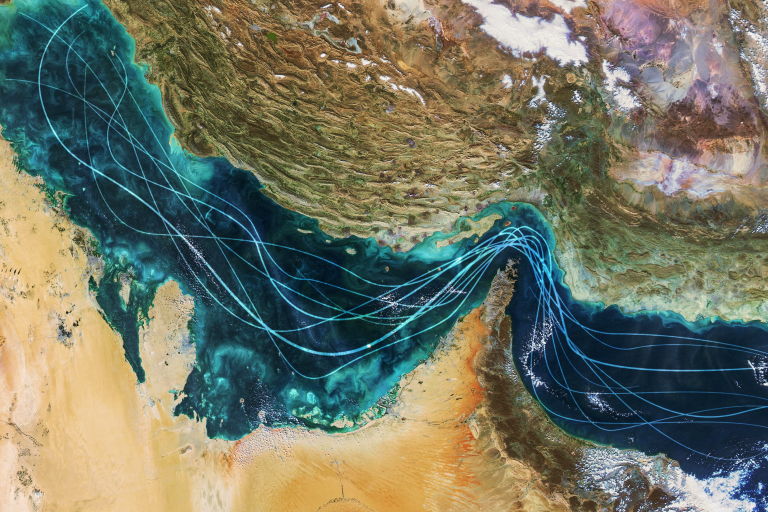
You have probably heard “Strait of Hormuz” on the news and thought, Well… that sounds important, but not really known why. It is one of those things many of us have heard about, but never really had explained plainly.
Here is the simple version: the Strait of Hormuz is a narrow stretch of water between Iran and Oman that connects the Persian Gulf to the open ocean. Think of it like a tiny exit ramp for a huge amount of the world’s energy. Roughly 20 million barrels of oil per day moved through it in 2024. In plain English: a small strip of water carries an outsized amount of the fuel that keeps the world moving.
Why should Americans care? Because when that waterway is open, energy flows more normally. When it is threatened, restricted, or effectively shut down, oil prices can jump. And when oil prices jump, that tends to show up in places Americans actually notice: gas prices, shipping costs, and inflation. The biggest factor in gasoline prices is still crude oil, so trouble there can absolutely hit wallets here.
As of April 21, 2026, the Strait is technically not fully closed, but it is still heavily disrupted. Reuters reported that only three ships crossed in the prior 24 hours, compared with roughly 140 ships a day before the conflict escalated. So the takeaway is this: the Strait of Hormuz is a small passage with a big job, and when it gets jammed up, the ripple effects can travel all the way to your local gas station.